The Unbound
How can there be no definitive version of a given ballet, despite it having been performed for centuries?
What if a choreographer wanted to make a ballet look like a sport rather than a ballet?
Why do some characters work so well, a consistent story isn't even needed?
The Unbound is a collection of ballets that are built differently. Their real-world staging, history, and interpretations demand a little more investigation to truly understand.

Ondine & Water Spirits
Step into a world of mermaids, naiads, sirens, and mysterious spirits of the sea. This collection follows their journey through ballet history—from early theatrical spectacles and ancient mythology to the legendary Ondine and the many water spirits that followed.


Robin Hood In Ballet
Robin Hood has been turned into ballet again and again, with choreographers taking the legendary outlaw in wildly different directions. From traditional full-length productions to contemporary dance theater with live music and cinematic sword fights, every version creates its own Robin Hood.

The Lion, the Witch and the Wardrobe
The Lion, the Witch and the Wardrobe has inspired multiple ballet adaptations, each translating C. S. Lewis’s magical world into movement, character, costume, and theatrical spectacle. With Aslan, the White Witch, fauns, talking animals, and an enchanted winter landscape, the story gives choreographers enormous freedom to decide what Narnia should look like onstage.

ABT Studio Company | Sir Frederick Ashton's Les Patineurs
Les Patineurs (The Skaters) was choreographed by Sir Frederick Ashton in 1937 to music by Giacomo Meyerbeer, arranged by Constant Lambert. It turns the ballet stage into an ice-skating rink. Ice skating had already become a popular competitive sport by this time, making it unusual to see a sport translated into ballet. Instead of simply pretending to skate, the dancers imitate the movements, patterns, and spirit of skaters at a winter rink. It is a wonderful example of a ballet that reimagines its subject completely, and shifts the audiences expectation of a visit to the ballet theater.
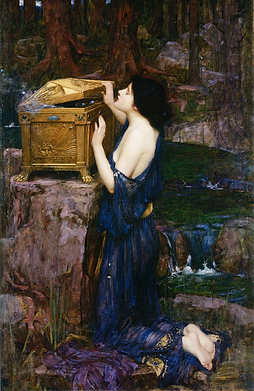
Pandora
Pandora has inspired choreographers to reimagine the ancient Greek myth of the woman who opened a forbidden box and unleashed its contents upon the world. From traditional story ballets to bold contemporary interpretations, each version explores curiosity, temptation, and the consequences of opening what was meant to remain closed.

Bacchus (Dionysus)
in Ballet
Bacchus (Dionysus) in Ballet
From Ballet Fantastique's original production of Robin Hood. Original medieval orchestral music score written by Liza Carbé.
Robin Hood is used as "school ballet" globally, and has remained so for over a century.

Arthurian Ballets
Arthurian Ballets

Arabian Nights and Themes
Arabian Nights and Themes
