

English Women's Shoe (1670–1680). Preserved in a museum collection, this elegant shoe illustrates an earlier meaning of red footwear—fashion and social status. Over time, red shoes would also come to symbolize temptation, artistic ambition, religious authority, and cultural identity.


A Lady of Fashion with Black Shawl and Red Shoes (1778). In this portrait by John Collett, red shoes serve as a fashionable statement of taste and status, and haven't yet become a moral symbol.

Child's Red Shoes (c. 1885–1895). Preserved in a museum collection, these red leather shoes were made for an actual child during the same era when The Red Shoes was widely read and adapted for the stage. They offer a reminder that Andersen's famous tale was inspired by an everyday object that children really wore.

Shoes of Pope Benedict XV (c. 1914–1922). While Andersen's red shoes represented vanity and temptation, the red shoes of the papacy traditionally symbolize authority, sacrifice, and service to the Church.

Dorothy's Ruby Slippers (1939). Preserved in the Smithsonian's National Museum of American History, these iconic shoes were created for The Wizard of Oz. Like Andersen's red shoes, they became far more than footwear—transforming into one of the most recognizable symbols in film history.

Fashion Shoes by Newton Elkin (1947). Created just one year before the release of The Red Shoes film, these striking red-and-gold shoes illustrate how red footwear had already become associated with glamour, elegance, and visual spectacle in popular culture.

Marilyn Monroe's Shoes. Preserved as a piece of Hollywood history, these iconic red heels demonstrate how red footwear became associated with glamour, celebrity, and feminine allure. Far removed from Andersen's moral tale, the red shoe had become a symbol of fame and cultural fascination.

Christian Dior Shoes (2005). Preserved in a museum collection, these red-and-black heels reflect the enduring appeal of colors long associated with glamour, desire, and cultural symbolism.

Red Canvas Sneakers. From museum collections and fairy tales to modern wardrobes, red shoes have remained a recognizable and enduring fashion statement across generations.

High-Heeled Pointe Shoes (2011). This striking hybrid of pointe shoe and high heel brings together two enduring symbols of performance and fashion. More than 150 years after Andersen's fairy tale, the red shoe continues to inspire new interpretations.
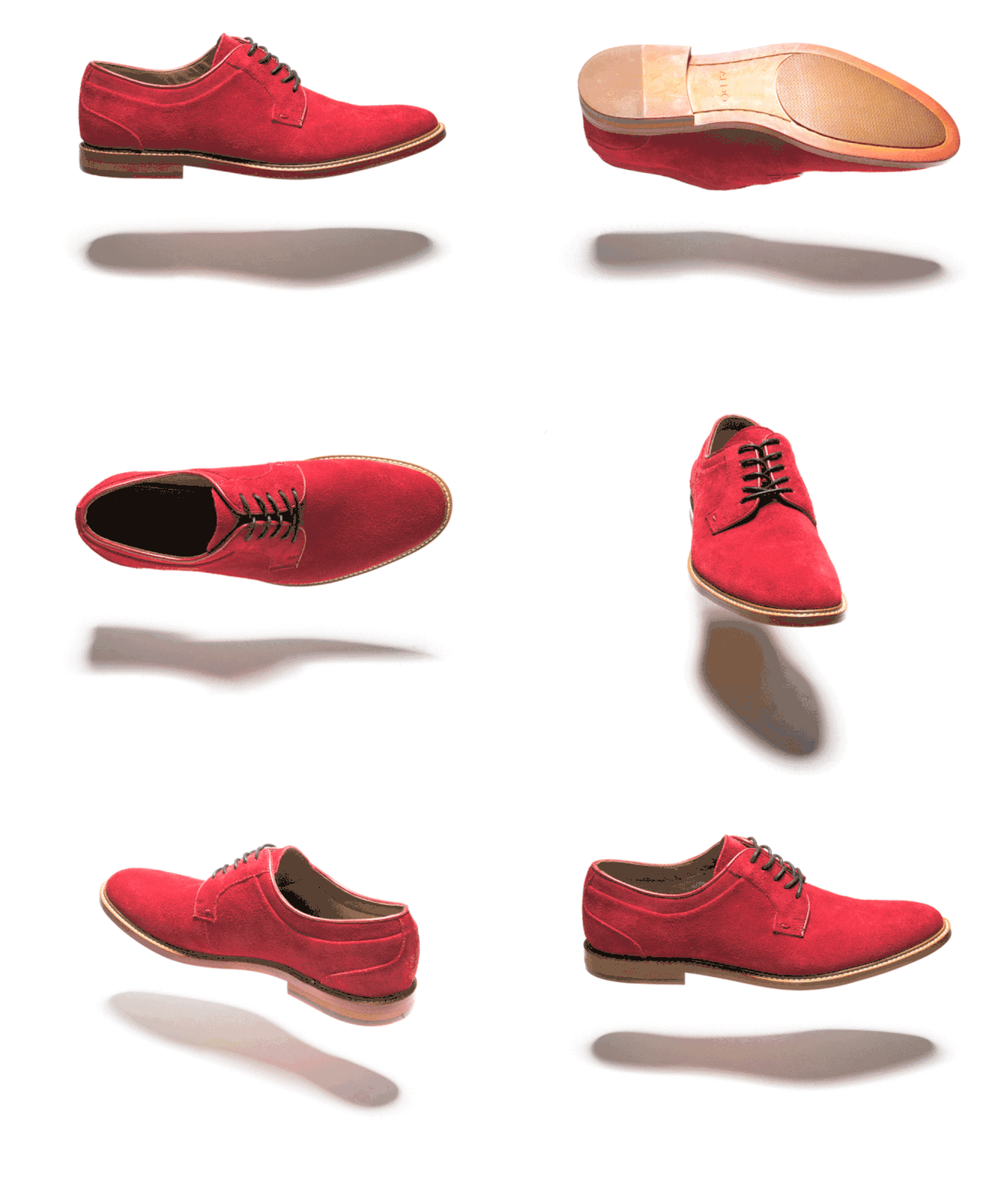
Aldo Red Suede Men's Shoe (2018). More than 170 years after Andersen published The Red Shoes, red footwear remained a bold fashion statement. Once associated with a fairy-tale heroine, the red shoe had become a symbol of individuality, confidence, and personal style.
The Red Shoes
A story that hasn't ended Yet
The "Red Shoe" ideology was born as a Fashion and Status symbol
Long before The Red Shoes became a famous ballet, red shoes were already turning heads. Across Europe, brightly colored footwear was directly associated with wealth, fashion, and social status. Red dyes were very expensive. Owning red shoes was a bold statement that not everyone could afford. Paintings, surviving shoes, and museum collections show that red footwear had been capturing attention for centuries before they took center stage.
The Red Shoes on Paper
Every story starts somewhere. For Hans Christian Andersen, painful experiences inspired his story. He witnessed a humiliating dispute regarding red shoes between his father, who was a poor shoemaker, and a wealthy customer. Andersen also later admitted that he remembered feeling guilty about being distracted by pride over his new boots during a religious ceremony at church. From these memories he created Karen, a young girl whose obsession with a pair of beautiful red shoes leads to terror and irreversible tragedy. Some biographers have also noted that Andersen's half-sister, Karen Marie, may be where he derived the protagonist's name. The Red Shoes became one of his most famous fairy tales, and leaves the reader pondering pride, regret, and religiousity.

Hans Christian Andersen 1860
Karen and the Dancing Shoes
The story follows a poor girl named Karen who dreams of owning a beautiful pair of red shoes. When she finally gets them, she becomes increasingly fascinated by them and begins wearing them when she shouldn't. Soon, the shoes take on a life of their own, forcing her to dance without stopping. While the tale is filled with magical and sometimes frightening events, it also explores very human emotions such as desire, vanity, and the danger of becoming consumed by something we cannot let go.

She Threw Her Shoes into the River (1899). Karen attempts to escape by casting the red shoes into a river. William Heath Robinson's illustration captures the tragedy in his illustration.
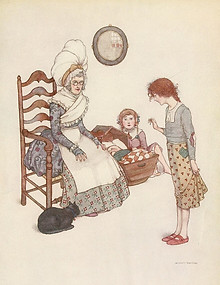
She Threw Her Shoes into the River (1899). Karen attempts to escape by casting the red shoes into a river. William Heath Robinson's illustration captures the tragedy in his illustration.

Illustration for The Red Shoes (1913). As the story continued its journey through ballet, theatre, and film, artists also reimagined it in print. This illustration by W. Heath Robinson helped keep Andersen's tale alive for a new generation of readers.
From Fairy Tale to the Stage
Readers were not the only people captivated by Andersen's story. By the late nineteenth century, The Red Shoes had begun appearing on stage in theatrical productions and ballet adaptations across Europe. Choreographers were drawn to its unforgettable image of enchanted shoes and endless dancing, while audiences loved its mix of fantasy, drama, and emotion. With each new production, the story moved farther from the printed page and deeper into the world of performance.

Poster for The Red Shoes (1898). This striking poster advertised a ballet adaptation of Andersen's fairy tale at London's Alhambra Theatre. By the end of the nineteenth century, The Red Shoes had already moved beyond the printed page, and on to stage.

Émilienne d'Alençon and Julia Seale in The Red Shoes (1898). This promotional photograph captures two performers from the Alhambra Theatre production of The Red Shoes. Their costumes offer a glimpse into one of the earliest ballet adaptations of Andersen's story.
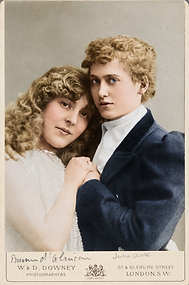
Promotional Portrait for The Red Shoes (1899). Created during the London run of The Red Shoes. Preserved today in the Victoria and Albert Museum, it survives as a rare record of a production whose choreography has been lost.
A Film That Changed Everything
More than a century after Hans Christian Andersen published his fairy tale, The Red Shoes found new life on the silver screen. Released in 1948 and directed by Michael Powell and Emeric Pressburger, the film tells the story of Victoria Page, a talented ballerina forced to choose between love and her artistic ambitions. Although inspired by Andersen's tale, the film explores a different kind of struggle: how much a person is willing to sacrifice for their dreams.
The film also transformed ballerina Moira Shearer into an international star. Already a respected dancer, Shearer was hesitant to appear in a major motion picture, fearing that Hollywood might distract from her reputation as a serious classical artist. Despite her concerns, she accepted the role and delivered a performance that became one of the most iconic in dance-film history. The success of the film brought her worldwide fame, but it also linked her name forever with The Red Shoes, much as Victoria Page herself becomes inseparable from the ballet she performs. Widely regarded as one of the greatest dance films ever made, The Red Shoes went on to inspire generations of dancers, filmmakers, and artists.

Poster for The Red Shoes (1898). This striking poster advertised a ballet adaptation of Andersen's fairy tale at London's Alhambra Theatre. By the end of the nineteenth century, The Red Shoes had already moved beyond the printed page, and on to stage.

Poster for The Red Shoes (1898). This striking poster advertised a ballet adaptation of Andersen's fairy tale at London's Alhambra Theatre. By the end of the nineteenth century, The Red Shoes had already moved beyond the printed page, and on to stage.
The Red Shoes Returns to Ballet
While many fairy tales inspired countless ballet adaptations, The Red Shoes followed a different path. After appearing in several nineteenth-century stage productions, the story became most closely associated with the acclaimed 1948 film. Decades later, choreographer Matthew Bourne brought the story back to the ballet stage with his 2016 production The Red Shoes, inspired by the film rather than Andersen's original tale. The ballet introduced the story to a new generation of audiences and demonstrated that the image of the red shoes still had the power to captivate the imagination.


Red Shoes don't quit
The story's journey is far from over. More than 175 years after Hans Christian Andersen first published The Red Shoes, the tale continues to find new forms and meanings. In 2022, the biographical short film Òran na h-Eala explored the life of ballerina Moira Shearer through a performance by Scottish actress Shannon Davidson, focusing on the personal struggles, sacrifices, and emotions behind the woman forever associated with The Red Shoes. That same year also saw the release of The Red Shoes: Next Step, a contemporary dance drama that carried the famous symbol into a new setting and a new generation.
Over the centuries, red shoes have come to represent many different ideas—fashion, status, temptation, faith, ambition, artistic devotion, glamour, and self-expression. Few symbols have been adapted so successfully across time. No other color of shoe has left quite the same mark on the imagination. The story of the Red Shoes is still unfolding, with new chapters yet to be written.


Scottish actress Shannon Davidson as Moira Shearer in the short film Òran na h-Eala.

