The Flames of Paris
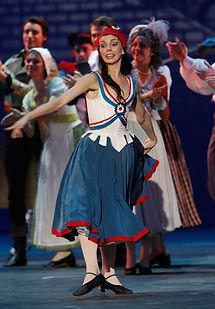
Natalia Osipova in an extract from Flames of Paris during the re-opening gala of the Bolshoi Theatre, 28 October 2011.
QUICK F A C T S
- ✦ Premiered on November 7, 1932, at the Kirov Theatre in Leningrad (now St. Petersburg).
✦ Choreographed by Vasily Vainonen, whose energetic staging helped make the ballet one of the Soviet era's most celebrated works.
✦ Features a score by Boris Asafyev that incorporates melodies and songs associated with the French Revolution.
✦ Inspired by the novel Les Rouges du Midi (The Reds of the South) by French writer Félix Gras.
✦ Combines classical ballet technique with character dance, folk-inspired movement, pantomime, virtuosic solos, and large-scale ensemble scenes.
✦ Reflects Soviet artistic ideals by drawing parallels between the French Revolution and the revolutionary history of Russia.
✦ Famous for its grand crowd scenes and patriotic celebrations, which emphasize the power of ordinary people acting together.
✦ The leading roles of Jeanne, Jérôme, and Philippe represent citizens who become heroes during a time of political upheaval.

Soviet ballerina Natalia Dudinskaya helped make The Flames of Paris one of the defining revolutionary ballets of the 20th century.
S U M M A R Y
The Flames of Paris tells the gripping story of the French Revolution, a pivotal period when ordinary citizens rose up against oppression and fought to reshape their nation. First performed in 1932 in Soviet Russia, the ballet features a powerful score by Boris Asafyev and dynamic choreography by Vasily Vainonen. The story follows a peasant brother and sister, Jeanne and Jérôme, whose lives are transformed by the growing revolutionary movement.

Boris Asafyev wove revolutionary melodies into his score, giving The Flames of Paris a powerful connection to the history that inspired it.

Liberty Leading the People by Eugène Delacroix, one of the most famous artistic symbols of revolution and freedom.
After Jérôme is brutally beaten for defending his family, Jeanne helps rally the villagers to join the fight for justice. Together with the passionate revolutionary leader Philippe, they unite the people against the aristocracy and march on the Tuileries Palace. Through courage, sacrifice, and determination, ordinary citizens become the driving force behind extraordinary change.
Renowned for its explosive energy and dramatic choreography, The Flames of Paris combines classical ballet technique with spirited French and Basque folk dances. The result is a vibrant spectacle that brings the revolutionary struggle to life on stage, culminating in a triumphant celebration of victory. Although set in the late eighteenth century, the ballet continues to resonate with audiences through its enduring themes of courage, unity, and the pursuit of freedom.

A dancer performs beneath the Eiffel Tower, one of Paris's most recognizable landmarks and a lasting symbol of France.
E N C O R E
✦ On Today’s Stage
The Flames of Paris is performed less frequently than many classical ballets, but it remains a spectacular showcase of large ensemble dancing, revolutionary drama, and heroic storytelling. Modern revivals continue to attract audiences with their athletic choreography, stirring music, and grand crowd scenes.
✦ Iconic Interpreters
The ballet became closely associated with generations of Soviet and Russian dancers through major productions at the Kirov and Bolshoi theatres. Its demanding roles and famous pas de deux continue to be performed by leading dancers in gala performances and modern revivals.
✦ Legacy
Created in 1932, The Flames of Paris became one of the most famous revolutionary ballets ever staged. Combining classical ballet, folk-inspired dance, and themes of liberty and collective action, it remains a powerful example of how ballet can bring historical events to life through music, movement, and drama.