Green Table
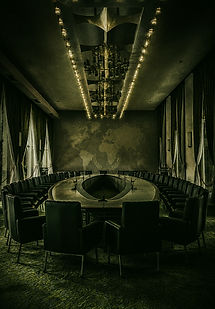
Around the Green Table, words become policies, policies become wars, and wars become history.
QUICK F A C T S
- ✦ The Green Table premiered in 1932 and was choreographed by Kurt Jooss.
✦ The ballet was created as a response to the growing political tensions and militarism of the early twentieth century.
✦ A skeletal figure called Death appears throughout the ballet, linking its different scenes and characters.
✦ The work won first prize at an international choreography competition in Paris shortly after its creation.
✦ Rather than telling a fairy tale, The Green Table uses dance to explore the human cost of war and political decisions.
✦ It is widely considered one of the most important anti-war ballets ever created.

Lisa Czóbel, a leading artist of Ballets Jooss. A contemporary French publication praised her performances in The Green Table as among the company's greatest successes.
S U M M A R Y
The Green Table is a powerful anti-war ballet that begins and ends around a negotiating table where diplomats debate while ordinary people pay the price of their decisions. Between these scenes, the ballet follows a series of characters whose lives are disrupted by war, including soldiers, civilians, refugees, and grieving families. Moving through battlefields, farewells, and moments of loss, the ballet shows how conflict spreads suffering far beyond those who fight. A skeletal figure known as Death appears throughout the work, reminding audiences that war's consequences reach everyone.

Members of Ballets Jooss photographed during the company's years at Dartington Hall in England, where Kurt Jooss and his dancers developed and rehearsed works including The Green Table before international tours.

Long after the arguments end, the consequences remain.
The ballet was created in 1932 by choreographer Kurt Jooss with music by Fritz A. Cohen. It premiered during a period of political instability in Europe, just a few years before the outbreak of the Second World War. Rather than celebrating military heroism, Jooss used dance to criticize war and expose the human cost hidden behind political speeches and diplomatic negotiations. The work won first prize at an international choreography competition in Paris and quickly became one of the most influential ballets of the twentieth century.
Today, The Green Table remains one of ballet's most important statements on war, power, and human suffering. Its stark imagery, expressive movement, and timeless message continue to resonate with audiences around the world. Although created nearly a century ago, the ballet still feels relevant whenever societies confront conflict, displacement, and political division. It stands as a reminder that behind every decision made by leaders are real people whose lives can be changed forever.

Ballerina Lisa Czóbel—who famously created the role of the Young Girl in the 1932 premiere of The Green Table—performing with Jack Menn in Carmen at the Stadttheater Bern, c. 1945. Photo by Fred Erismann, commons.
E N C O R E
✦ On Today's Stage
The Green Table remains a respected landmark of twentieth-century dance theater and is periodically revived by major ballet and contemporary dance companies, particularly those with an interest in preserving historically significant works.
✦ Iconic Interpreters
Because the ballet is built around archetypal characters rather than traditional star roles, performers are often remembered for their portrayals of Death, the ballet's most striking figure. Many generations of dancers from the Jooss Ballet and later revivals have helped keep the work alive.
✦ Legacy
Widely regarded as one of the greatest anti-war ballets ever created, The Green Table helped establish dance as a powerful medium for social and political commentary. Its influence can be seen in later narrative and expressionist works that use movement to confront real-world issues rather than fairy tales or romantic stories.