Coppélia

Adeline Genée in the title role of Coppélia, photographed in London in 1900 wearing an ornate village-style costume inspired by the ballet’s playful Romantic-era setting.
QUICK F A C T S
- ✦ Coppélia premiered on May 25, 1870, at the Théâtre Impérial de l’Opéra (Salle Le Peletier) in Paris, France, choreography by Arthur Saint-Léon and music by Léo Delibes.
✦ The libretto was written by Charles Nuitter alongside Arthur Saint-Léon.
✦ The ballet was inspired by Der Sandmann (“The Sandman”), a dark German Romantic story by E. T. A. Hoffmann.
✦ Unlike Hoffmann’s eerie original tale, Coppélia transformed the story into a lighthearted comic ballet filled with humor, mistaken identity, and romance.
✦ The role of Swanhilda was created by 16-year-old Italian ballerina Giuseppina Bozzacchi, who became an overnight sensation after the premiere.
✦ Only months after the ballet’s debut, the Franco-Prussian War forced the Paris Opéra to close. During the Siege of Paris, Giuseppina Bozzacchi tragically died of smallpox on her seventeenth birthday.
✦ Later revivals by Marius Petipa and George Balanchine helped shape many modern versions of the ballet.
✦ The ballet is celebrated for its charming village scenes, lively character dancing, and one of the earliest famous “doll” roles in ballet history.
✦ Despite its difficult beginning, Coppélia survived and later became one of the most frequently performed ballets in the history of the Paris Opéra.

Misty Copeland in a performance of Coppélia presented during the Abu Dhabi Festival, photographed by Naim Chidiac.
S U M M A R Y
Coppélia is one of the most beloved comic ballets in dance history. It premiered on May 25, 1870, at the Paris Opéra with choreography by Arthur Saint-Léon and music by Léo Delibes. The ballet was inspired by the dark German Romantic story Der Sandmann (“The Sandman”) by E. T. A. Hoffmann, but the ballet transformed the original tale into a playful comedy filled with humor, mistaken identity, and lively dancing. Today, Coppélia is remembered not only for its charming story but also for Delibes’s sparkling score, which became one of the most famous ballet soundtracks ever written.

Giuseppina Bozzacchi as Swanhilda in Act I of Coppélia, photographed in Paris around the ballet’s original 1870 premiere at the Théâtre Impérial de l’Opéra!
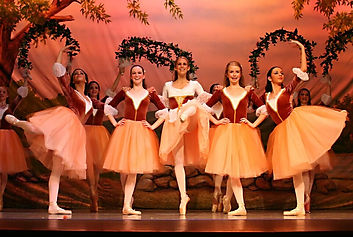
Coppélia performed by five young dancers in a warm village-style scene, reflecting the ballet’s cheerful atmosphere, lively folk-inspired dancing, and joyful celebration of community, 2007. commons
The story follows Franz, a village boy who becomes fascinated by a mysterious girl named Coppélia sitting silently on a balcony. He does not realize that she is actually a life-sized mechanical doll created by the eccentric inventor Dr. Coppélius. Franz’s fiancée, Swanhilda, grows jealous and decides to investigate for herself. Sneaking into the inventor’s workshop, she discovers the truth and cleverly disguises herself as the doll to trick Dr. Coppélius and rescue Franz from his foolish obsession. Through Swanhilda’s courage and humor, Franz learns the difference between fantasy and real love, and the ballet ends happily with their wedding celebration. Themes of illusion, curiosity, and deception continue to make Coppélia feel surprisingly modern even today.
Although the ballet premiered successfully, tragedy soon interrupted its early success. Only a few months after the premiere, the Franco-Prussian War forced the Paris Opéra to close, and the ballet’s original 16-year-old star, Giuseppina Bozzacchi, tragically died of smallpox during the Siege of Paris on her seventeenth birthday. Despite this heartbreaking beginning, Coppélia survived and eventually became one of the most frequently performed ballets in the history of the Paris Opéra. Later revivals by legendary choreographer Marius Petipa helped shape many of the versions audiences see today. Modern productions around the world continue to reinterpret the ballet, but its blend of comedy, fantasy, and humanity has kept Coppélia popular for more than 150 years.

Gerd Andersson and Teddy Rhodin photographed in 1958 in a lively promotional image connected to Coppélia, reflecting the ballet’s playful charm and romantic spirit.
E N C O R E
✦ On Today’s Stage
Coppélia remains one of the world’s most beloved comic ballets, performed by companies across the globe for its lively dancing, charming humor, and unforgettable doll-inspired fantasy.
✦ Iconic Interpreters
Legendary dancers associated with Coppélia include Giuseppina Bozzacchi, who originated the role of Swanhilda in 1870, along with later stars such as Misty Copeland and choreographers like Marius Petipa and George Balanchine, whose revivals helped shape modern productions.
✦ Legacy
Blending comedy, romance, village celebration, and mechanical fantasy, Coppélia became one of ballet’s most enduring classics and helped inspire generations of “living doll” stories in dance, theater, film, and popular culture.