Façade
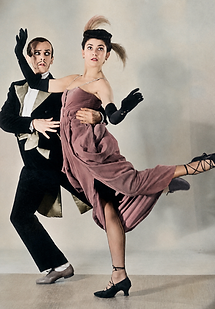
Robert Helpmann and Margot Fonteyn in Façade. Their stylish performances helped make Frederick Ashton's comic ballet a classic of British dance.
QUICK F A C T S
- ✦ Premiered in 1931 and was choreographed by Sir Frederick Ashton for the Camargo Society.
✦ Set to music by William Walton, adapted from his experimental collaboration Façade with poet Edith Sitwell.
✦ Unlike many ballets, Façade has no traditional plot and is presented as a series of humorous dance scenes.
✦ The ballet playfully parodies popular social and ballroom dances, including the tango, polka, and other character dances.
✦ Considered a classic of British ballet, Façade remains celebrated for its wit, charm, and distinctive theatrical humor.

A 1953 newspaper feature on Alicia Markova, one of the original stars of Frederick Ashton's Façade and a leading figure in twentieth-century ballet.
S U M M A R Y
Façade is a witty one-act ballet choreographed by Sir Frederick Ashton in 1931 for the Camargo Society. Instead of telling a traditional story, the ballet presents a series of humorous dance scenes that gently poke fun at popular social and ballroom dances. Through exaggerated gestures, playful characters, and clever choreography, Ashton transforms everyday dance styles into a lighthearted celebration of comedy and movement.

Sir Frederick Ashton and ballerina Moira Shearer share a backstage tea break in 1952. Together, they helped shape the golden age of British ballet.

Two innovators of British modernism: Edith Sitwell's unconventional poetry and William Walton's inventive music combined to create the world of Façade. Portrait of Edith Sitwell by Roger Fry and bronze bust of William Walton by Maurice Lambert.
The ballet is set to music by British composer William Walton. The score originated as part of Façade, an experimental collaboration between Walton and poet Edith Sitwell that combined music with surreal, nonsensical poetry. For the ballet, Ashton used Walton's lively orchestral music, which blends classical sounds with jazz rhythms, popular dance styles, and music-hall influences. The result is a playful soundtrack that perfectly matches the ballet's sense of humor.
Each section of Façade has its own unique personality, from elegant ballroom dances to energetic tangos and comic character pieces. Although the ballet appears light and effortless, it requires tremendous musical precision and acting skill from its dancers. More than ninety years after its premiere, Façade remains one of the most charming examples of British ballet, admired for its wit, creativity, and joyful sense of fun.

E N C O R E
✦ On Today’s Stage
Although not performed as frequently as some of Ashton's larger ballets, Façade remains a beloved part of the British ballet tradition. Its blend of comedy, character work, and musical wit continues to delight audiences whenever it returns to the stage.
✦ Iconic Interpreters
The original cast included Sir Frederick Ashton and the legendary Alicia Markova. Over the decades, generations of dancers from the Royal Ballet and Birmingham Royal Ballet have embraced the ballet's unique combination of classical technique, comic timing, and theatrical charm.
✦ Legacy
Façade helped establish Frederick Ashton as one of Britain's most important choreographers. By transforming William Walton's playful score into a series of humorous dance scenes, Ashton created a ballet that proved classical dance could be clever, stylish, and genuinely funny. Today, it remains one of the defining works of British ballet history.